

You step into the cascade, steam rolls upward, and the snap of a brilliant thought dazzles you like a bathroom lightbulb turning itself on. You might be mulling over dinner plans or humming a tune when the answer to yesterday’s impossible puzzle just clicks. Then you reach for the faucet and—poof—it is gone, slipping away with the suds. Even your prized shaving products cannot rescue it. That single square of porcelain tile has claimed yet another intellectual casualty. Let us stop the massacre.
Table of Contents
Why Inspiration Strikes in the Shower
The Sensory Sanctuary
Outside the bathroom door, life drips with deadlines, alarms, and screen glare. Inside, the hiss of water masks noise, and familiar motions do not tax your focus. Blood vessels relax under the heat, breathing slows, and cortisol levels dip. Your mind, unshackled, wanders down corridors it often neglects. When the outside world shrinks, half-forgotten memories and odd connections join hands in a spontaneous dance.
The Brain at Idle
Neuroscientists call this the default mode network, a behind-the-scenes system that thrives when tasks are simple. Routine movements—turn soap bottle, rinse hair, tap foot—occupy barely a sliver of your prefrontal cortex. The freed bandwidth invites neuron A to phone neuron B about a fresh idea. A new recipe marries last week’s article outline. A marketing hook sidles up to a joke you heard in third grade. Creativity erupts because the brain is idling rather than grinding.
Why Ideas Vanish Before You Dry Off
Working Memory Is Not Waterproof
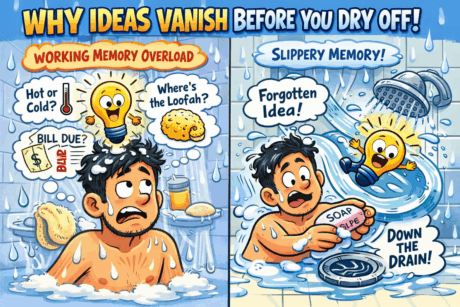
Your working memory holds only a handful of items at once. In the shower those slots fill quickly with temperature checks, conditioner timers, and the hunt for a lost loofah. Your shiny idea tries to elbow its way in, but the queue is tight. Just as it surfaces, another thought—did I pay the electric bill—pushes it out. By the time you yank the towel from the rack, you know you had brilliance yet cannot say what it was.
Soap Versus Synapses
Encoding a thought for long-term storage demands repetition, elaboration, or written language. You cannot chant the idea aloud without risking water in your mouth, and you cannot scrawl on damp skin without looking like a toddler who found markers. Warm water also nudges the body toward a relaxed, almost meditative state that favors creativity yet dims memory consolidation. It is a sweet irony: the shower hands you gifts, then makes certain you drop them.
Tools That Turn Soap Bubbles into Notes
Waterproof Writing Pads
Some genius out there decided paper should fear no splash. Waterproof notepads attach to tile with suction cups and come with pencils that write while wet. Scribble mid-rinse, laugh at your jagged handwriting later, and revel in the knowledge that ink beats forgetfulness. Even if the letters drift like seaweed, they hold enough clues to jog memory once the mirror clears.
Voice Assistants with Steam Tolerance
Modern phones survive puddles, and countertop smart speakers shrug at humidity. Place one outside the curtain and use a wake phrase. Shout your idea in clear sentences while the water drones overhead. Hearing your own voice repeats the information and leaves a digital breadcrumb. Just check the transcript before guests discover your off-key shower karaoke plus business plan mash-up.
Designing a Post-Shower Idea Pipeline
The Towel-Stage Transfer
Capture does not equal completion. Make a micro-ritual: before leaving the bathroom, relocate every scribble or voice memo to your regular system—journal, notes app, sticky on the laptop edge. The sensory bridge from damp skin to dry keyboard locks in context. Skipping the transfer is like taking perfect photos and never downloading them; memories fade while still stuck in the camera.
Morning Sorting Ritual
Not every flash of genius deserves shelf space. Once dressed and caffeinated, spend five calm minutes reviewing your stash. Ask three quick questions: Does it spark excitement? Does it solve something? Can it grow with minimal effort? If you answer yes twice, file under Action. If not, archive guilt-free. This habit prevents idea clutter faster than mildew spray keeps grout clear.
Training Your Brain to Deliver More Ideas
Consistency Breeds Creativity
When your subconscious sees you respect its offerings, it sends more. Leave a notebook in the kitchen, a recorder in the car, and a note widget on the lock screen. Each capture spot whispers, “Ideas matter here.” Over time, musings surface during dishwashing, dog walking, and that lull while waiting for an update to install. Creativity becomes a daily visitor instead of a shy guest.
Celebrate the Follow-Through
Finishing an idea loop—concept to completed article, sketch to finalized logo—releases a potent cocktail of dopamine and pride. Celebrate tiny victories: publish the blog post, share the joke online, test the prototype in your garage. Rewards teach the brain that remembering pays off. The next time an idea bubbles up, that neural network will push it even harder toward consciousness.
Keeping the Habit Light and Playful
A process that feels like homework will fail quicker than a bar of soap slides off the ledge. Choose a bright-colored waterproof pad or give your voice assistant a silly nickname. Play a victory jingle whenever you jot a thought. Laughter lowers friction, and low friction protects consistency. In the same way you upgraded from bargain razors to razors that treat your face kindly, upgrade your note-catching so it feels like a treat, not a chore.
Conclusion
The shower is no longer the final resting place for your intellectual fireworks. By arming yourself with a splash-proof pad or a loyal voice assistant, moving notes out of the bathroom before the mirror defogs, and rewarding yourself for follow-through, you transform a tiled echo chamber into a studio of practical creativity. Let hot water relax muscles and spawn ideas, but never again let drain water carry them away. Step out knowing the next spark will live long enough to light real results.