

Nobody tells you that the proud moment you grow a respectable beard might be followed by a blizzard of tiny white specks on your shirt. Congratulations—you now have beard dandruff. Before you sprint to the mirror or hide under a scarf, take a breath.
Plenty of guys deal with this itchy nuisance, and, yes, you can fix it without shaving your face bare or emptying an entire aisle of shaving products. Stick around; by the end of this read you will understand why flakes form, how to calm the storm, and how to keep your facial hair looking like a statement rather than a snow globe.
Table of Contents
- What Exactly Is Beard Dandruff?
- Why Does It Happen?
- The Skin Under Your Beard: A Delicate Ecosystem
- Everyday Habits That Fan the Flake Storm
- Ingredients That Show Your Skin Some Respect
- Crafting a Routine That Actually Sticks
- Lifestyle Tweaks That Help More Than You Think
- When to Ask a Professional
- Conclusion
What Exactly Is Beard Dandruff?
Beard dandruff, sometimes called “beardruff,” is the buildup of dead skin cells trapped beneath facial hair. The result is a flurry of white or yellowish flakes falling whenever you scratch your chin or stroke your mustache. Much like scalp dandruff, it is usually linked to an overgrowth of Malassezia yeast combined with excess sebum and irritated skin.
Your beard simply hides the evidence until the flakes make a dramatic exit onto your shirt. The good news is that this condition is rarely harmful; the bad news is that it can itch like crazy and tank your confidence if ignored.
Why Does It Happen?
Several culprits team up to create the perfect flake storm. First is natural oil. Sebaceous glands underneath the beard continue to pump out sebum, which can trap dead cells and feed opportunistic yeast. Second is poor exfoliation. Unlike the scalp, your face often misses out on regular scrubbing because hair conceals dry patches.
Third is weather. Cold, dry air strips moisture from skin, while humid heat pushes oil production into overdrive. Finally, harsh cleansers or extremely hot showers can strip the skin barrier, prompting a rebound of oil and more irritation. When these factors collide, dandruff forms a flaky alliance that clings to whiskers.
The Skin Under Your Beard: A Delicate Ecosystem
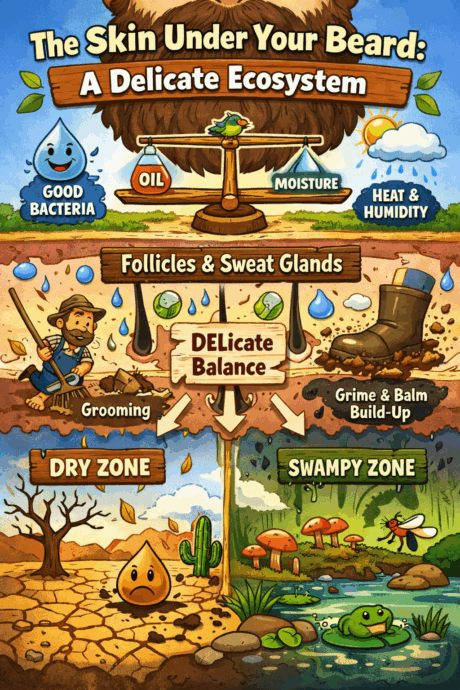
Think of the skin beneath your beard as a micro–rain forest. It hosts oil glands, sweat ducts, beneficial bacteria, and hair follicles in a delicate balance. When you introduce new factors—dense hair that traps moisture, styling balms, or environmental grime—the ecosystem shifts.
If you scrub too aggressively, it feels like a drought; skip washing and it turns into a swamp. Either extreme stresses the skin, leading to inflammation, redness, and flaking. The secret is to maintain that Goldilocks zone: not too dry, not too oily, just balanced enough for healthy cell turnover.
Everyday Habits That Fan the Flake Storm
Bad beard habits can turn mild dryness into a full-on snowstorm. Over-washing with a sulfate-packed soap strips protective oils, so the skin retaliates by producing even more sebum. Neglecting hydration leaves dead cells clinging until they clump together in visible scales. Scratching with fingernails introduces bacteria and microtears that cause more irritation.
Even something as innocent as sharing a towel can swap yeast colonies and ramp up flake production. Recognizing these daily missteps is the first step toward change. That means cooler showers, gentler cleansers, fresh towels, and hands-off discipline when the itch strikes.
Ingredients That Show Your Skin Some Respect
Not all cleansers or oils are created equal. Look for wash formulas containing zinc pyrithione, selenium sulfide, or ketoconazole; these active agents slow yeast growth and calm inflammation. Tea tree oil offers a gentler, botanical option with antimicrobial perks, while salicylic acid loosens dead cells so they rinse away instead of piling up.
For moisture, jojoba oil mimics natural sebum, providing hydration without the greasy fallout. Shea butter and glycerin lock in water so skin stays supple beneath the beard. Products with simple, fragrance-free ingredient lists minimize the chance of allergic flare-ups.
Crafting a Routine That Actually Sticks
A flake-free beard starts with consistency. Begin each morning by splashing lukewarm water on your face to loosen any overnight debris. Follow with a dedicated beard wash two or three times a week; on off days, rinse without cleanser to avoid stripping oils. After patting dry with a clean towel, massage a pea-sized amount of lightweight beard oil from root to tip, making sure it reaches the skin.
Before bed, brush through with a boar-bristle brush that gently lifts flakes and evenly distributes natural oils. Within a week or two, most men notice fewer flakes and a healthier-looking beard.
Lifestyle Tweaks That Help More Than You Think
Your beard reflects more than grooming habits; it mirrors overall wellness. Staying hydrated keeps skin cells plump and less prone to cracking. A diet rich in omega-3 fatty acids—think salmon, walnuts, and flaxseed—reduces inflammation and supports the skin barrier. Limiting sugar and alcohol helps tame yeast overgrowth.
Stress management also matters; cortisol spikes can inflame sebaceous glands, throwing oil production off balance. Even your pillowcase plays a role: swap cotton for silk or change bedding more frequently to avoid oil buildup that can migrate back to your beard while you sleep.
When to Ask a Professional
Most beard dandruff clears with diligent at-home care, but there are times to call in a dermatologist. If flakes turn yellow and greasy, you may be dealing with seborrheic dermatitis. If inflamed red patches appear or itching becomes unbearable, prescription-strength antifungal shampoo or topical steroids might be necessary.
Similarly, if you notice hair loss, pustules, or widespread facial rash, a medical check-up rules out conditions like psoriasis or fungal folliculitis. Treatment is usually straightforward, so there is no need to white-knuckle through weeks of discomfort.
Conclusion
Beard dandruff does not make you unclean, and it certainly is not a life sentence. By understanding what causes those pesky flakes and adopting a balanced routine filled with gentle cleansers, nourishing oils, and smart lifestyle choices, you can keep both your chin and your confidence flake-free.
The journey to a healthier beard is a marathon rather than a sprint, but stick with these tips and soon the only white you will see on your shirt is an intentional fashion choice, not a snowy fallout from your face forest.