

Somewhere between the hiss of hot water and the squeak of a clean mirror, your shower turns into a tiny concert hall where big feelings slip out as easily as soap. That is why a three-minute pop-punk anthem can make you nostalgic, energized, or teary before the conditioner sets in. The effect is not random. Your brain is primed to process sound differently in warm, enclosed spaces, and that shift can dial up both memory and mood regulation.
If you care about a smooth start to the day, the right playlist matters as much as the right routine, even when that routine includes shaving products that keep your face calm while your inner teenager belts out the chorus.
Table of Contents
Why The Shower Turns You Into a DJ
The shower is a pocket of privacy that encourages deep focus. Water patter creates a soft sound blanket that blocks outside noise, which leaves your brain fewer distractions to filter. You engage with music more completely, since there is little competition for your attention. In that cocoon, songs feel closer, richer, and more relevant.
Your voice also sounds fuller because of natural bathroom reverb, which invites you to sing along. When you participate physically, even in a slightly off key way, your brain releases a little reward, and that tiny reward can snowball into a full mood lift.
Steam, Acoustics, and Your Brain
Warmth encourages relaxation by nudging your body toward a parasympathetic state. Muscles loosen, breathing settles, and your baseline tension drops. Steam and tile reflect sound, which boosts certain frequencies in a pleasant way. Your favorite tracks seem more immersive because the room literally amplifies them.
That physical immersion pairs with a mental one, since the shower is a predictable ritual. Rituals prime the brain for associations. When the water turns on, your mind expects the next steps, and music becomes part of that familiar sequence.
The Privacy Effect and Emotional Release
Most people do not hold back in the shower, because there are no audience rules or social scripts to manage. That sense of privacy lowers inhibition, and lower inhibition allows emotions to surface. The music gets to meet you where you are, not where you pretend to be. A lyric that felt corny in the car can feel profound behind a curtain.
This does not mean you are fragile. It means your mind recognizes a safe moment to process whatever it parked during the day, which can include happy relief, gentle sadness, or that oddly specific Blink-182 bridge that still stings in the best way.
Nostalgia, Memory, and Pop-Punk Tears
Nostalgia is not only a fond look backward. It is a stabilizer that connects present you to a set of remembered identities. When you hear songs that defined school hallways, summer jobs, or late night homework, you re-activate the emotional context that lived around those tracks.
Pop-punk is a powerful trigger because it blends high energy with themes of yearning and change. The combination says move forward, but also remember, which is an ideal fit for a morning ritual that transitions you from sleepy to ready.
The Adolescent Imprint
Music you loved during adolescence sticks with unusual strength. Brain regions involved in reward and memory form strong ties in that window, so the soundtrack from those years is easy to recall and hard to ignore. When a chorus from that era hits, your system lights up with recognition and meaning.
That is why you can forget a password but remember every word on an old album, including the whisper before the third chorus. The shower’s focus amplifies the effect, which is why tears can arrive right as the conditioner timer runs out.
Lyrical Simplicity, Big Feelings
Pop-punk lyrics tend to be direct, which helps your brain map them to personal themes. Simple phrases leave space for your own details, and that blank space invites projection. In the shower, you are not evaluating metaphors like a literature class, you are letting them wash over you while you scrub. The result is a clean emotional hit that feels honest. You did not hunt for nuance. You found clarity, and clarity can feel like relief.
Rhythm, Breath, and the Lather Loop
Music does more than set a vibe. It influences your timing. Steady tempos can synchronize with your breath and your hand motions, which creates a smooth loop between what you hear and what you do. That loop reduces decision fatigue, since you are not guessing what comes next.
Wash, rinse, sing, repeat. Your mind enjoys the predictability, and the predictability supports a calmer exit from the bathroom. If a track runs at a comfortable pace, your movements often match it, and your morning becomes a little less chaotic.
Tempo and Task Synchrony
Mid-tempo tracks often work best for everyday routines, because they keep your actions steady without rushing you. Extremely fast songs can spike your energy before your brain is awake, which leads to hurried motions and soap in the eye. Extremely slow songs can deflate your readiness, which makes you linger longer than your schedule allows. A balanced tempo gives you momentum with control. It feels like a gentle push rather than a frantic shove.
The Dopamine Drip
Music that you anticipate, especially a familiar chorus, offers a small dopamine bump when the moment lands. In the shower, those tiny surges line up with habitual steps, which turns basic grooming into a sequence of rewarding checkpoints.
Lather is a verse. Rinse is a chorus. Towel is the outro. That may sound fanciful, yet it reflects a simple truth. When routine tasks carry rewards, you are more likely to keep them consistent, and consistency supports both skin health and mood.
Curating a Mood-Smart Shower Playlist
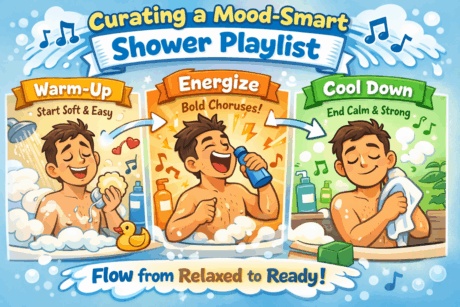
A good shower playlist is not only a pile of favorites. It is a gentle curve that starts warm and ends confident. Begin with something welcoming, then climb toward tracks that make you feel competent and clear.
You can include one song that tugs the heart, provided you follow it with something that steadies you. Think of the sequence as a narrative arc. You enter one emotional state and exit another, and the songs are the bridge that gets you there without a traffic jam.
Warm-Up Tracks and Energy Ramps
Start with a track that eases you into the water as it reaches temperature. Choose vocals that sit comfortably in your range, so you can warm up your voice without strain. Move into a slightly faster song as you wash, which encourages a smooth cadence without jitter. Place your boldest chorus near the end, so you step out with a sense of triumph rather than a sense of unfinished business. The goal is not perfection. The goal is flow.
Mood Regulation Without Whiplash
If you love sad songs, you can keep them. Just respect the effect they have. Follow a tender track with one that contains a positive turn. Contrast gives perspective, not whiplash. You are teaching your mind to process feeling, then release it. That rhythm matches the way water carries away the remnants of the day. You feel it, you name it, you let it go.
Scent and Sound Pairings
Your senses talk to each other more than you think. Bright citrus notes can make upbeat tracks feel even brighter. Woodsy or herbaceous scents can ground upbeat music so it does not feel flighty. Calming notes like lavender can soften the edges of an intense chorus, which keeps you steady while you sing with conviction. None of this is mystical. It is your brain forming cross-sensory associations that support the mood you want.
Why Some Songs Hit Harder
Not every track will move you in the same way, even within the same genre. Personal meaning and melodic structure play a big role. So do the tiny performance details your brain catalogs without asking for permission. A certain drum fill can feel like a door opening. A vocal crack on a single note can feel like truth breaking through. The shower’s acoustics spotlight those details, which is why the same track can feel bigger here than anywhere else.
Personal Meaning and Context
Songs become emotional containers for specific ideas. One track might represent ambition. Another might represent forgiveness. When the context matters, the song carries extra weight. The water lowers external noise and raises internal signal, so the meaning gets through more cleanly. You are not analyzing. You are recognizing. Recognition is powerful, because it tells you that you are consistent, even if life around you is not.
The Chorus Effect and Singability
Choruses are designed for participation. They repeat, they invite breath, and they give your voice a target. When you meet that target, even as a solo act, your body interprets the success as a win. Wins feel good, and good feelings translate into confidence. Confidence is a useful thing to take into the day. The shower makes it easy to collect a small stack of them, one chorus at a time.
Common Myths About Shower Music
There are two popular misconceptions that deserve a gentle rinse. The first is that louder always means better. The second is that sad songs always make you sadder. Neither holds up when you consider how mood and attention work.
Loudness Equals Catharsis
Volume can feel powerful, yet catharsis comes from engagement, not sheer decibels. Too much volume crowds your perception and can create tension rather than relief. You want clarity, so you can lock onto the parts that matter. Pick a level where the music sits comfortably above the water without turning your bathroom into a festival stage. Your ears will thank you, and your voice will last.
Sad Songs Make You Sadder
Sad songs can be comforting when they offer resonance and release. The key is sequence. If you stop on sadness, you may carry that tone out the door. If you follow a heavy moment with a track that lifts, you get the benefit without the drag. Your playlist becomes a gentle therapist that knows when to nod and when to hand you a pep talk.
From Shower to Day: Carryover Effects
The real value of a smart shower playlist shows up after you step out. Your mind remembers the feeling state you cultivated and brings it along to breakfast, transit, and first meetings. If the sequence ends with clarity and a touch of humor, you are more likely to meet the day with the same. With practice, your playlist becomes a reliable primer that smooths the transition between private self and public role. It is not magic. It is a well tuned habit with a soundtrack.
Conclusion
Your shower playlist is a tiny mood machine that works with steam, acoustics, memory, and timing. It can soothe or spark, and sometimes it can make you cry on the exact line you promised yourself you had grown past. That is fine. You are not doing it wrong. You are using a quiet moment to let music do what it does best, which is to help you feel and then move forward.
Pick songs that guide you from soft to strong. Pair them with a routine that feels kind. Sing loudly enough to make the tiles hum, then step out ready to meet the day with clear skin, clear head, and a chorus you can carry.