

A clean shave should feel like a sigh of relief, not a minor emergency. The right cream turns a chore into something almost relaxing, the way fresh sheets turn sleep into a small luxury. If you have ever rushed a morning shave and felt your skin protest for hours, you already know the quiet cost of skipping the good stuff.
Yes, there are many shaving products, but the star of this show is the cream that cushions, hydrates, and keeps the blade honest. Once you understand what that lather is doing at skin level, the case for cream writes itself.
Table of Contents
The Real Job of Lather
Shaving cream does not merely sit there looking fluffy. It softens the hair shaft by feeding it water and humectants, which makes each strand bend and cut more easily. Hydrated stubble is weaker than dry stubble, so the blade does not need to bulldoze its way through.
That means fewer passes, less tugging, and a calmer finish for your skin. The lather also suspends tiny amounts of oil that keep the razor moving without chatter, the same way a skate glides better on smooth ice than on slush.
Cushion and Glide
Good lather builds a protective film between blade and skin. Think of it as a guardrail that helps the edge skim across the surface rather than scoot into every pore and bump. The texture matters. A thin, airy froth collapses before you are half done, while a dense, creamy layer stays put and resists heat and water as you rinse. That staying power lets the razor keep an even angle, so you do not carve random red stripes across your jawline.
Why Water Alone Fails
Water is essential, but it is slippery for only a second. As soon as the blade touches down, plain water drains away and friction returns. Cream changes the physics of the shave. Surfactants lower surface tension so the formula spreads evenly. Emollients reduce drag. Humectants hold moisture in the hair so it cuts more cleanly. Without that matrix, you are left with luck and bravado. Those work fine until they do not.
Skin Comfort is Not a Luxury
Skin is a living barrier that hates unnecessary drama. Each stroke scrapes away not only hair but also part of the acid mantle that keeps moisture in and irritants out. A proper cream limits that collateral damage by adding slip and replenishing lipids as you shave. Less abrasion means fewer nicks, fewer inflamed follicles, and fewer ingrown hairs waiting to ambush you by lunchtime.
If your face feels tight after a shave, your product is underperforming or you are using none at all. A solid formula sets up the post-shave to be peaceful. When the skin’s outer layer remains intact, aftershave does not sting like liquid karma.
You can use milder toners and light moisturizers instead of dousing yourself in harsh antiseptics. Over time, this gentler approach improves texture, reduces blotchiness, and keeps that fresh-from-the-sink glow instead of the classic fire-engine look.
The Blade Lasts Longer
Metal may be tough, but hair is surprisingly abrasive. Dry whiskers act like tiny wires that chew up edge coatings. When the blade has to fight through dry, resistant growth, microchips and corrosion multiply. Cream acts as a buffer that reduces wear and rinses cleanly so residue does not linger on the cartridge.
A better glide translates to more comfortable shaves from the same razor. You can pretend this is not about money, yet it is pleasant when your cartridges live to see another week. Cleaner passes also keep edges aligned, which preserves sharpness and tames that harsh scrape feeling.
Technique Still Matters
Cream is powerful, but it cannot rescue reckless technique. Hydrate the beard with warm water for a minute. Load a brush or your hands with a thumbnail of cream and work it until the texture turns glossy and rich. Aim for a yogurt-like consistency, not airy foam.
Keep your razor angle gentle, use light pressure, and shave with the grain before trying cross-grain. Rinse often, relather where needed, and stop when the surface feels glassy. Chasing perfection with a hot blade is a quick way to earn a dotted chin.
What Good Cream Looks Like
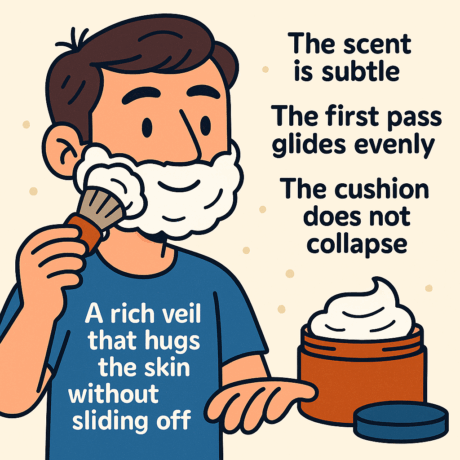
Quality formulas share a few traits you can feel. The scent is subtle and fades rather than barging into your cologne. The texture whips into a rich veil that hugs the skin without sliding off. During the first pass, the razor glides evenly. During the second, the cushion does not collapse. After rinsing, skin feels calm and limber instead of squeaky. That tactile checklist never lies.
Ingredients That Pull Their Weight
Look for glycerin or propanediol to hold water in the hair, natural oils like jojoba or meadowfoam to add emollience without greasiness, and mild surfactants that lather without stripping. Aloe and allantoin soothe. Low levels of lactic acid can help keep ingrowns at bay by nudging away dull surface cells. Fragrance should be restrained. Strong perfume in a wash-off step is like heavy makeup for a sprint: lots of effort, little payoff.
Sensitive Skin Deserves Special Care
If your skin reacts to everything, reach for fragrance free options with pared-down ingredient lists. Avoid strong essential oils and heavy alcohol. Patch test on the neck, then proceed if the area looks calm after a day. Use cool water for the final rinse to shut down redness, then pat dry with a soft towel. Rubbing furiously creates the very irritation you were trying to avoid.
Travel, Speed, and The Morning Rush
You can still treat your face kindly when time is tight. A brushless cream that spreads quickly is perfect for a hotel sink or a gym locker room. It gives you cushion and glide without the whole ritual of building a bowl lather. If you use an electric razor, a thin pre-shave layer can reduce drag and leave fewer hot spots. Speed and comfort do not need to be enemies. They just need a good referee.
Myths That Refuse to Retire
The first myth says that soap is the same as cream. Standard soap binds oil and rinses it away, which leaves the surface tight and squeaky. That is the exact opposite of what a blade wants. The second myth claims that multi-blade cartridges make prep unnecessary.
More blades can cut with fewer passes, yet they can also multiply friction if the surface is not properly conditioned. The third myth suggests that oil alone is enough. Pure oil improves slip, but it lacks the water binding and airy structure that real lather provides.
Results You Can See and Feel
When you use proper lather, the finish looks even, pores appear calmer, and the jawline feels smooth in every direction. Makeup sits better on a well-prepped surface. Beards trimmed with tidy edges look sharper because the skin around them is not angry. The difference is visible in bright office lights and in the side mirror while you wait for coffee. Smooth skin is not vanity. It is maintenance.
Conclusion
Shaving cream is the quiet hero of a comfortable routine. It softens hair, shields skin, and lets your razor do its job with calm precision. Skip it and you invite friction, fatigue, and a face that files a complaint before breakfast. Choose a formula that feels rich, rinse clean, mind your technique, and your skin will repay you every single time.