

Splashing on aftershave should feel like the final victory lap of your grooming routine, not a punishment devised by a cartoon villain. Yet many men smear on whatever bottle is closest without asking whether the ingredients play nicely with their skin.
Seconds later, cheeks burn, pores revolt, and the day starts with regret. If that sounds familiar, your current pick from the shelf of shaving products may secretly loathe you. Below are the unmistakable signs of that toxic relationship and how to trade misery for harmony.
Table of Contents
The Hidden Enemy in Your Medicine Cabinet
A bottle’s design can fool you; sophisticated fonts and ocean-blue liquid do not guarantee skin-friendly chemistry. Mass-market formulas often rely on strong alcohol, heavy fragrance, and synthetic preservatives. One quick sniff might feel refreshing, but those additives can disrupt your skin’s protective barrier, setting the stage for irritation you will notice only after the sink has drained.
Why Formulas Differ
Aftershaves fall into three major camps: splash, lotion, and balm. Splashes lean on alcohol for quick disinfection, lotions add lightweight moisturizers, and balms go heavy on emollients with minimal sting. Understanding these categories helps you diagnose which style works with your personal oil balance instead of against it.
The Role of pH
Healthy skin sits slightly acidic, hovering around 5.5. Many budget aftershaves land closer to neutral or even alkaline, accidentally stripping the acid mantle that keeps bacteria at bay. When that shield erodes, redness and breakouts follow. Reading a label rarely reveals pH, so noticing your skin’s response remains the best clue.
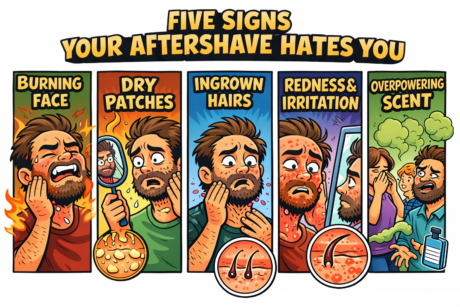
Sign One: Your Face Feels Like a Campfire
The first clue lives in the immediate aftermath. A brief tingle is normal, but an extended burn means the formula is waging chemical warfare.
What Causes the Flames
High-proof alcohol evaporates fast, carrying water from the upper skin layers with it. That sudden dehydration leaves nerve endings exposed, delivering the classic sting many mistake for “working.” Toss in fragrance oils and the pain escalates. Sensitive skin amplifies the sensation tenfold.
How to Extinguish the Heat
Switch to a low-alcohol or alcohol-free balm rich in aloe, allantoin, or panthenol. These ingredients soothe inflamed tissue while providing moisture instead of stealing it. Applying a cold compress for twenty seconds before the balm can also shut down overactive capillaries.
Sign Two: Dry Patches Appear by Lunch
If midday reveals flaky islands across your cheeks or jaw line, your aftershave might be dissolving natural oils faster than your sebaceous glands can replace them.
The Dehydration Domino
Alcohol is the main culprit once again, but menthol and certain essential oils can worsen the drought. They may feel cooling, yet they accelerate transepidermal water loss. Without moisture, your skin forms rough scales that undermine any close shave you achieved earlier.
Restoring the Moisture Bank
Look for hydrating heroes such as glycerin, hyaluronic acid, and squalane in the ingredient deck. Apply a gentle, fragrance-free moisturizer on top of your revised aftershave to seal in water. Drinking more fluids throughout the day also helps skin replenish from within.
Sign Three: Ingrown Hairs Multiply
A sudden crop of razor bumps along the neck or cheeks often traces back to harsh astringents that tighten pores too aggressively right after shaving.
The Pore-Contraction Problem
When pores constrict before cut hairs have fully emerged, those hairs curl inward, piercing tender tissue. The result is itchy bumps that can last for days. Heavy fragrance compounds, particularly synthetic musks, add inflammation that exacerbates the issue.
Unclogging the Path
Select a formula containing low-dose salicylic acid or witch hazel. Both ingredients keep pores clear without slamming them shut. Exfoliating twice a week with a mild chemical peel reduces dead-skin build-up, giving new hairs a clean exit route.
Sign Four: Red Dots Turn Into a Polka-Dot Beard
Persistent redness scattered like confetti is your body waving a distress flag.
Blood Vessel Backlash
Irritants in some aftershaves dilate capillaries, especially on fair or reactive skin. Over time, those vessels remain enlarged, creating a permanent flushed appearance that no amount of cool water can mask.
Calming the Canvas
Seek botanical extracts such as chamomile, green tea, or centella asiatica. Each ingredient contains bioactive compounds that decrease inflammation and strengthen vessel walls. Patting, rather than rubbing the product in, minimizes friction that can trigger additional flare-ups.
Sign Five: Your Scent Walks In Ten Minutes Before You Do
An aftershave should whisper confidence, not broadcast chemical fireworks across the office.
Fragrance Overload
Companies sometimes overcompensate for harsh base notes by drowning formulas in synthetic fragrance, which becomes overpowering and allergenic. Strong scents linger longer on clothing and hair, exacerbating sensitivity for both the wearer and everyone nearby.
Subtlety for the Win
Opt for naturally derived essential oil blends or unscented options. If you crave a signature smell, layer a small spritz of high-quality cologne on pulse points rather than forcing aftershave to do double duty.
Conclusion
Your aftershave is supposed to be an ally, sealing each shave with comfort, hydration, and a faint scent of sophistication. If it torches your skin, dries you out, breeds ingrown hairs, paints you red, or gasses your coworkers, it is time to break up. Choose formulas that respect your skin’s barrier and match your sensitivity level. Treat your face with the kindness it deserves, and it will reward you with smoothness, resilience, and a confidence that arrives exactly when you do.