

Most grooming articles focus on the heroic chin or the regal mustache, yet the hair lurking beneath your jawline rarely earns more than a half-hearted swipe of disposable steel. Day after day, you lather, scrape, and hurry along, ignoring the prickly underbrush until it rebels with redness and itch.
In truth, your neck beard is less villain and more victim, paying the price for rushed routines and mismatched shaving products. It is time to say sorry, then make things right.
Table of Contents
The Anatomy of the Neglected Neckline
Where the Beard Ends and Territory Begins
Chin whiskers usually grow straight, enjoying prime real estate bathed in sunlight and fresh air. Neck hairs, by contrast, sprout at sharper angles, twisting toward the collar where friction, sweat, and movement conspire against them. The strands are thicker, the direction chaotic, and the skin more sensitive. That wild growth pattern explains why random tugging feels worse under the jaw than on the cheek.
Hidden Skin Under Siege
Collars trap humidity like a terrarium. Heat and moisture soften the outer skin layer, turning it vulnerable to nicks. When you skip proper prep, blades skid, snag, and leave microscopic trenches. These tiny wounds invite bacteria, which explains those angry red dots that show up the morning after a hurried shave.
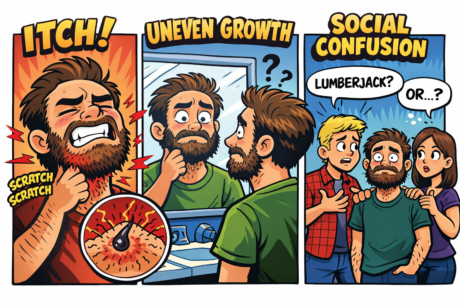
How Neglect Breeds Itch, Uneven Growth, and Social Confusion
The Sweat and Oil Trap
Sweat glands work overtime on the neck. Natural oils mix with salt and dead skin, forming a sticky film that catches dust. Left untouched, this cocktail blocks follicles and sparks ingrown hairs. The resulting itch has no off switch, so you scratch. Each scratch inflames, and the cycle continues until your neckline feels like it is hosting a hornet convention.
The Patchwork Quilt Effect
Neglect also creates visual chaos. When neck hair grows faster than cheek hair, your stylish beard blurs into a fuzzy scarf. At certain angles, it looks like your chin is melting. Friends cannot decide whether to congratulate the lumberjack vibe or stage an intervention. The worst part is that simple maintenance could turn mayhem into symmetry.
Rethinking the Shaving Map
Setting a Proper Neckline
Place two fingers above your Adam’s apple. Imagine a gentle curve extending from that point to just below each earlobe. Everything below the curve is fair game for trimming, while the upper section deserves blending rather than total removal. This imaginary border guards against the dreaded “chin strap” look, where a harsh horizontal line announces that you used a ruler instead of good sense.
Choosing Gentle Tools
Multi-blade cartridges promise closeness, yet their narrow gaps clog quickly on wiry neck stubble. Consider a single-edge safety razor or an electric trimmer with a guard. These tools let you work with less pressure, reducing drag on sensitive skin. Sharpness trumps blade count. Change blades at the first sign of tugging rather than pressing harder and carving canals.
Establishing a Neck Beard Care Routine
Prep Like a Pro
Start with warm water to soften hair shafts. While the steam rises, massage a mild cleanser into the neckline. That removes sweat film and paves the way for smoother passes. Apply a transparent shave gel so you can see the curve you mapped earlier. Work in short strokes, rinsing after each. Racing through the task invites clogging and missed spots.
Post-Shave Peacekeeping
Cold water is the best security guard. A brisk splash closes pores and reduces swelling. Pat, do not rub, with a clean towel. Follow with an alcohol-free toner containing witch hazel to calm micro cuts. Lock in moisture with a lightweight balm rich in aloe or hyaluronic acid. The skin under your jawline needs nurturing every bit as much as your face.
The Confidence Dividend of a Tamed Neck
Visual Symmetry Signals Intent
Groomed necklines frame the face like a well-cut suit. The eye travels from hairline to collar without hiccup, reading the wearer as organized and intentional. Whether you are pitching a client or meeting friends for tacos, a neat neckline says you care enough about details to handle bigger responsibilities.
Comfort Speaks Louder Than Style
Trimmed, healthy neck hair bends easily instead of stabbing inward. Less irritation means fewer subconscious touches, so you appear relaxed rather than twitchy. Comfort builds confidence, and confidence outshines any designer wardrobe. Apologizing to your neck beard, then treating it well, gifts you that quiet assurance.
Conclusion
Your neck beard never asked to be the outcast of your grooming routine, yet it shoulders the brunt of heat, friction, and careless blade work. A sincere apology begins with understanding its unique needs, then meeting them with warm water, sharp tools, and soothing aftercare. Show that patch of skin the respect it deserves and it will reward you with comfort, symmetry, and a subtle boost of self-assurance every time you catch your reflection.