

Picture this: it is a sleepy Tuesday dawn and the bathroom mirror is already judging you as you fumble for your trusted razor, coffee fragrance just starting to whisper from the kitchen. In that hushed moment you might hear the ghost of locker-room legends whispering that blades must be dull to be gentle or that shaving will turn peach fuzz into steel wire.
Search long enough in comment threads and you will also stumble on entire debates insisting that buying new shaving products is pointless because stubble will always win. Let us torch the old rumors, keep the cheeky humor, and reveal what modern science actually says. Grab a seat, steady your grip, and prepare for follicular facts served sizzling.
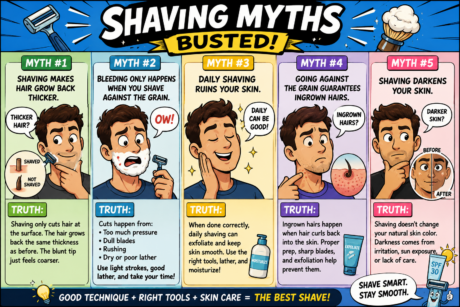
Table of Contents
Myth 1: Shaving Makes Hair Grow Back Thicker
The Follicle Science
Hair does not gain superpowers just because you gave it a trim. Each strand is like a pencil that has been sharpened: the tip appears thicker only because the blunt edge reflects more light and feels coarser. Your follicle sits beneath the skin with its own genetic blueprint and a predetermined diameter.
Whether you scrape the surface with a fresh cartridge or the blunt relic from last summer, you never touch the root’s design. What you do change is the shape of the cut shaft. A flat top has no tapered feather, so it rubs and pricks, fooling nerves into thinking new growth is denser and darker.
What Actually Changes
Temperature, hormones, nutrition, and even seasonal shifts can alter the rhythm of hair growth, but razor contact is not on that list. Once you slice a hair, growth continues at its usual cellular pace of about half an inch per month.
The myth survives because people shave more frequently when they notice stubble, mistaking correlation for cause. In truth, persistent shaving simply keeps you in a loop of noticing the same hairs sooner. Break the cycle for a week and you will see the familiar rate reveal itself.
How to Shave Smarter
If thicker stubble ruins your morning selfie, aim for methods that blunt the bluntness. Shave after a warm shower when shafts are hydrated and pliable, glide with a slick cushion of gel to let the razor cut cleanly, and finish with a light moisturizer to soften the cut edge.
These small moves restore the tapered feel you crave. For those craving even smoother results, consider exfoliating twice a week to free ingrown tips before they spiral under the skin surface.
Myth 2: Bleeding Only Happens When You Shave Against the Grain
Why Cuts Really Happen
Bleeding after shaving has been blamed on directional sins for centuries. Legends say one must always go with the grain or risk entire forests of red spots. While direction plays a role, micro nicks actually stem from pressure and repetition more than mapping lines on your jaw.
Hairs lie at varied angles like grass bent by wind, so a single pass never perfectly matches every strand. A smart routine uses multiple light passes, not a single forceful swoop, to tame rebellious patches without carving the dermis.
The Role of Lather
Skin is an elastic landscape dotted with pores, oil glands, and microscopic hills. Dragging steel across it is controlled friction, so lubricant selection matters. A transparent gel helps you see trouble zones, whereas a dense foam cushions better on wide cheeks.
No product can change hair direction, but it can let blades glide instead of bounce. Combine this with short strokes, rinsing the cartridge every few seconds, and you slash the risk of dot-dash carnage.
Post-Shave Care
Finishing touches also dictate whether you walk away spotless or freckled in crimson. Splash cool water to constrict vessels, pat gently with a clean towel, then press a damp alum block for twenty seconds.
The mineral tightens tissue and leaves a nearly invisible seal. Finally, dab an alcohol-free balm to calm inflammation. The whole ritual takes less than a podcast intro yet erases the myth that perfect orientation alone guards against bleeding.
Myth 3: Daily Shaving Ruins Your Skin
Daily Shaving as Exfoliation
Ask social media and you will find prophets warning that shaving daily will teach skin bad habits, trigger premature wrinkles, and empty your wallet in bandages. The reality is kinder. When done correctly, daily shaving acts like a mild exfoliation, sweeping away dead cells that can dull complexion.
Problems creep in only when haste replaces technique. Rushing invites dry strokes, skipped rinses, and clogged blades, each of which can roughen texture.
Tools and Timing Matter
Your epidermis replenishes itself roughly every month, but gentle removal of surface flakes can signal younger layers to bloom sooner. That fresh glow many attribute to magic serums can just as easily arrive from consistent, mindful shaving.
Pair the practice with a razor that suits your hair density, swap cartridges after five shaves, and keep lather time long enough for whiskers to swell. Treat the act as grooming, not combat, and skin thanks you.
Alternating Days Wisely
If daily maintenance is still too much ceremony, alternate days without sacrificing polish. On off days splash a mild cleanser followed by sunscreen to protect new cells. Reserve evenings for nourishing oil that reinforces the barrier while you sleep.
Healthy skin is the ultimate rebuttal to fear-laden myths, pristinely proving that frequency alone does not dictate fallout but rather the respect you give each deliberate stroke.
Myth 4: Going Against the Grain Guarantees Ingrown Hairs
The Root of Curvature
Ingrown hairs occur when a freshly cut strand doubles back into the follicle entrance and continues growing beneath the surface. This is most common where curls dominate, such as the neck or chin.
Going against growth does shorten hair below the pore edge, but curvature is the true culprit. People with tight coils report ingrowns regardless of direction because each strand is already spring-loaded toward the skin. The blame placed on grain ignores this biological wiring.
Angle Over Direction
Intensity also defines the outcome. A featherlike glide opposite growth can be kinder than a downward bulldozer assault with a dull blade. What matters is angle, not compass bearing. Keep the razor tilted at thirty degrees so the edge slices rather than scrapes.
Let the handle float using fingertips, never a clench. This method lifts hair for a clean sever while sparing follicle walls from jagged trauma.
Smart Prevention
To further dodge ingrowns, rinse with warm water to flush debris, then apply a serum that contains salicylic acid or tea tree oil. These ingredients dissolve trapped oil and calm swelling, giving emerging tips room to break through.
Sleep on a fresh pillowcase, allow nightly friction to stay minimal, and consider a single-blade safety razor if multiblades tend to tug. Over time these habits rewrite the narrative that direction alone scripts your destiny.
Myth 5: Shaving Causes Permanent Skin Darkening
Inflammation, Not Blades
Melanin production responds to inflammation, not the polite pass of a stainless blade. When skin darkens after repeated shaving it is usually reacting to microscopic irritation called post-inflammatory hyperpigmentation.
The same can follow mosquito bites or acne flare-ups. If your technique creates redness each morning, pigment cells may answer the alarm with extra color. Swap harsh aftershaves for soothing botanicals, and glide instead of scrape to keep melanocytes calm and very content.
Light and Pigment
Lighting in bathrooms also cheats perception. A warm bulb can cast shadows that exaggerate fine stubble, making skin look dull. Step outside and you may find the tone unchanged, a reminder that mirrors lie. Still, if you crave insurance, layer a broad-spectrum sunscreen after shaving.
Ultraviolet light amplifies any irritation into discoloration. Shielding the area prevents small bruises from maturing into dark patches, proving that shade, not steel, determines complexion with lasting grace.
Conclusion
Myths thrive on repetition, but good technique thrives on evidence, patience, and a willingness to tweak routine. Armed with sober facts and a splash of humor, you can navigate the bathroom battlefield with confidence, walking away smoother, safer, and utterly unfazed by the rumors that refuse to give up the ghost.