

Every fledgling barber-of-one starts with hope, a mirror, and a handful of ambition. Yet the difference between a sculpted jawline and a lopsided facial topiary often comes down to the smallest slip. In fact, most rookie gaffes are avoidable with a dash of patience, a grasp of technique, and the right shaving products patiently waiting on the sink. Before you charge your trimmer and charge into battle, read on. Your beard—and your dignity—will thank you.
Table of Contents
The Perils of Overconfidence
Misjudging Your Beard’s Terrain
Your face is not a flat canvas. It is a landscape of curves, angles, and sneaky hollows that can turn a smooth pass into a surprise bald patch. First timers often treat the beard like wallpaper: one straight swipe and call it done. The reality is more like mowing a rugged hillside. If you rush in without mapping those changing elevations, you dig trenches where cheeks should be lush.
Take a moment to tilt your head, feel the grain, and note where hairs grow upward, downward, or in rebellious spirals. Understanding the lay of the land prevents accidental deforestation and keeps the length consistent across every plane.
Charging In Without a Map
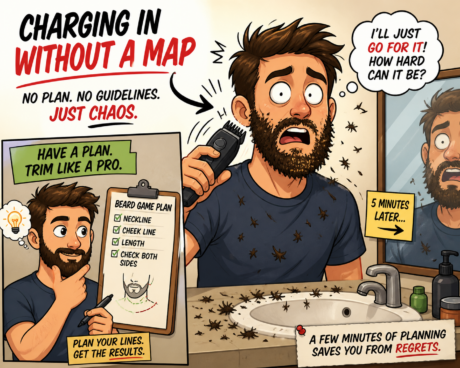
Confidence can make you bold, but boldness without a blueprint ends in chaos. Many novices power on the trimmer with no plan beyond “shorter than now.” Five minutes later they stare at a beard that graduates from lumberjack to teenage fuzz in uneven tiers.
A plan can be as simple as deciding your neckline, cheek line, and target length before the first cut. Visualize the end result, trace those boundaries with your fingertips, then commit. Planning may not feel daring, yet it transforms guesswork into controlled artistry.
Tool Trouble
Using Dull Blades
A trimmer blade should glide through hair like a canoe on calm water. When it snags, it signals danger. Dull blades tug, yank, and leave jagged edges that fray within days. Worse, they tempt you to press harder, scraping skin and inviting irritation.
The rookie mistake is assuming the store-bought edge lasts forever. Treat blades as consumables. Clean them after every session, oil them weekly, and replace them at the first sign of drag. Sharp tools slice cleanly, making the job faster, safer, and infinitely smoother.
Ignoring Guard Lengths
Trimmers come with guards for a reason. They are the bumpers in this follicular bowling game. First timers either forget to attach one or choose a setting blindly. The result: a jarring mix of stubble plains and thicket peaks.
Before trimming, snap on the longest guard and make an exploratory pass. If it still looks like a winter coat, step down one guard at a time until you reach the sweet spot. Moving gradually prevents the heart-dropping moment when you look down to see a clump the size of a hamster on the counter.
Technique Fumbles
Dry Trimming Disasters
Patience may be a virtue, but hair’s moisture content is its best friend. Attempting to trim a bone-dry beard is like sawing through straw: brittle hairs scatter, split ends flourish, and accuracy plummets.
Splash warm water on your face or, better yet, trim right after a shower when strands are supple. Moisture allows blades to move smoothly, so you can trace crisp lines instead of hacking through dry tangles. Just pat the beard damp, not soaked, to avoid clogging your trimmer.
The One-Stroke Shave
Anyone who paints knows layers deliver depth. Beard sculpting is similar. One reckless pass from ear to chin may feel efficient, yet hair grows in all directions. Straight strokes miss stragglers, leaving tufts that resemble accidental speed bumps.
Adopt short, controlled passes that follow the grain. Then reverse direction gently to catch any survivors hiding behind the main flow. Multiple light strokes, rather than one heroic swipe, carve a uniform silhouette that looks intentional and polished.
Shape Shifting Snafus
Uneven Cheeks
Most new beard wearers fear trimming cheeks too low, so they hedge high. Seconds later an abrupt diagonal slants across the face like a landslide. Symmetry demands a guiding line. Picture an invisible arc from the ear’s midpoint to the edge of the mustache.
Use a finger or a white eyeliner pencil to trace it lightly before the trimmer touches skin. Work slowly from sideburns inward, pausing often to compare sides in the mirror. When both arcs match, wipe off the guideline and bask in the balance you created.
The Vanishing Jawline
In pursuit of sharpness, beginners sometimes carve the neckline directly under the chin. From the front, everything looks fine. Tilt the head back, though, and a naked strip grins back at you. The correct neckline sits roughly one finger above the Adam’s apple, curving up behind each ear.
Shaving any higher steals the beard’s foundation and shortens the face visually. Mark that lower boundary mentally and never cross it. A well-placed neckline accentuates the jaw without exposing an awkward patchwork of skin.
The Aftermath
Skipping the Clean-Up
Trimming ends, the sink resembles a snow globe of whiskers, and the rookie exits triumphantly, leaving hair confetti everywhere. Besides earning stares from roommates, those stray clippings sneak onto clothing, pillows, and unsuspecting pets.
Before declaring victory, rinse your face, run a hand mirror over the back of your jaw, and wipe stray stubble from ears and neck. Clean the sink thoroughly. Proper cleanup not only maintains hygiene but also reveals any uneven patches that escaped notice during the main event.
Forgetting Skin Care
A fresh trim is only half the story; the skin beneath needs attention. Newcomers often skip post-shave balm, assuming the work is done. Within hours, redness, itch, and micro-cuts launch a rebellion. Soothe the canvas with a gentle moisturizer or beard oil rich in vitamin E.
Hydrated skin supports healthy follicles and keeps those sharp new lines looking crisp rather than inflamed. Think of skin care as the encore that leaves the audience applauding instead of wincing.
Conclusion
A beard can be a badge of character or an accidental comedy sketch. The difference lies in respecting the details: plan your lines, honor your tools, move with intention, and treat your skin like royalty afterward. Master these fundamentals and the only thing screaming “first timer” will be the echo of mistakes you chose not to make.