

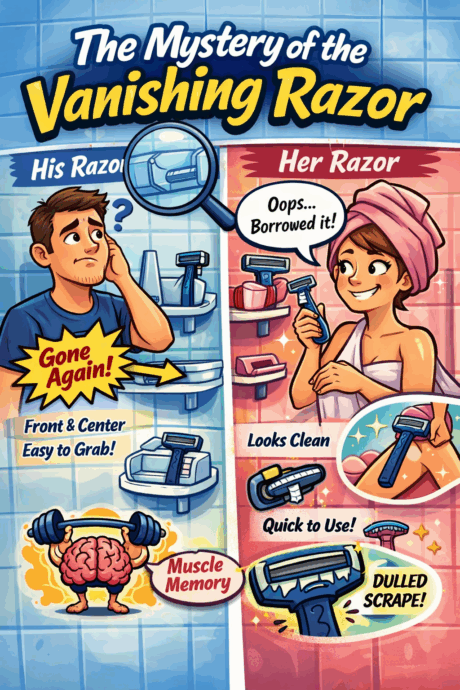
You open the shower caddy and there it is, the unmistakable evidence that your razor has gone on an unsanctioned field trip. If you share a bathroom, you know the drill. Your partner’s razor is on the other shelf, looking decorative, while yours has suddenly taken on double duty and a suspiciously dulled edge. There are reasons this happens, and they are not sinister.
Convenience, habit, and the simple truth that your gear looks trustworthy all play a role. Still, the habit is not ideal for either of you, and it can be fixed with smart choices in shaving products, storage, and honest conversation.
Table of Contents
- The Mystery of the Vanishing Razor
- Why It is Not Great for Her Skin
- Why It is Not Great for Your Face
- Better Options That Keep the Peace
- How to Talk About It Without Sounding Petty
- Technique Tweaks That Help Both of You
- Answering Common Myths
- A Quick Guide to Picking the Right Blade
- The Bottom Line on Borrowing
- Conclusion
The Mystery of the Vanishing Razor
Familiarity Wins When Time is Short
Morning routines run on instinct. If your razor sits front and center, it becomes the path of least resistance. The handle feels solid, the head looks clean, and it promises a close result. When someone is rushing, there is little incentive to hunt for their own tool.
What starts as a one-time borrow becomes routine, and soon your blade is meeting tasks it was not designed to handle. The problem is not malice. It is muscle memory and convenience. Visibility, positioning, and how “ready” your razor appears turn it into the household default.
The Lure of a Fresh Edge
There is also the performance factor. Many men’s razors prioritize stiffness and low flex to power through dense stubble. That same geometry can feel smooth on legs or underarms, especially on the first pass. Your partner notices a clean glide and decides it is the better option.
The irony is that this short-term win sets up a long-term loss for both of you. The blade wears faster, the edge becomes harsh, and the next shave feels worse. What was once the smooth choice becomes a scratchy compromise.
Why It is Not Great for Her Skin
Dullness and Drag Create Unwanted Drama
Using a razor right after it tackles coarse facial hair is not ideal. Coarse stubble blunts the edge and leaves microscopic roughness along the bevel. When that dulled blade meets longer hair on legs, it tugs before it cuts.
Tugging causes redness, makes ingrowns more likely, and encourages pressing harder to compensate. The result is irritation that lingers. Fresh, sharp blades prevent this chain reaction. If your partner borrows after your shave, she inherits an edge already past its best.
Micro Nicks and Bacteria are Uninvited Guests
Razors live in warm, damp spaces. After shaving, tiny nicks in the blade’s coating collect residue you cannot see. When two people share a blade, each adds their own mix of oils, dead skin, and soap film. That residue increases friction and can irritate sensitive areas.
While a quick rinse clears the obvious, it does not fully reset the edge. Consistent use of a personal razor that is rinsed well, shaken dry, and stored away from pooled water keeps the skin calmer and the experience cleaner.
Why It is Not Great for Your Face
Engineered for Stubble, Not Shins
Your razor is tuned for short, coarse hair at steep angles. When it goes to work on longer hair, it faces greater resistance and a higher chance of clogging. Clogs make you stroke the same area again and again. Those repeat passes dull the blade edge, wear out the lubrication strip, and break down the cartridge housing faster than normal. The next time you shave, you feel more scrape and less glide, which invites razor burn right where you least want it.
The Hidden Cost of Crossed Wires
Sharing sounds efficient until you run the numbers. Cartridges wear out faster when they jump between tasks. You replace them more often, which erodes any savings you thought you had by using one tool for everything. Worse, a tired blade tempts you to push harder, and pressure becomes the enemy of comfort. Keep each tool to the job it was built for, and you spend less over time while seeing better results every single week.
Better Options That Keep the Peace
Upgrade the Setup So Borrowing is Unnecessary
The easiest fix is to remove friction from her routine. A quality women’s handle with a pivot that actually tracks curves, paired with a cartridge designed for longer hair, makes an immediate difference.
If she prefers a minimalist approach, a unisex safety razor with a mild base plate and a sharp but forgiving blade works beautifully with a light touch. The key is consistency. When she has a tool that feels smooth and gives a close finish with fewer passes, your gear stops looking like a shortcut.
Storage and Boundaries That Actually Work
Good storage turns a truce into a habit. Mount two magnetic hooks or stands at eye level. Park each razor on its own perch so they dry completely. Keep a small tray for new blades and a separate one for spent cartridges. Add a simple label if you like. Clear organization removes the excuse to grab the nearest handle. It also keeps blades dry, which extends their life and preserves comfort.
How to Talk About It Without Sounding Petty
A conversation beats a passive-aggressive note on the mirror. Keep it light and practical. Start with shared goals: comfortable skin, fewer nicks, and tools that last. Mention that facial hair dulls blades quickly and that switching tasks reduces glide.
Offer to pick up a great razor for her and commit to keeping replacements on hand for both of you. Framing the discussion around comfort and care changes the tone from turf battle to teamwork. You are not guarding a trophy. You are protecting good shaves for everyone.
Technique Tweaks That Help Both of You
Prep, Angle, and Pressure are the Big Three
Warm water softens hair and wakes the skin. A slick cream or gel cushions the blade. Maintain a shallow angle so the edge slices, not scrapes. Use short strokes, rinse often, and let the razor do the work. If the blade drags, do not force it. Swap it. These fundamentals improve every shave, no matter the tool. When technique is right, borrowing loses its appeal because the results speak for themselves.
Post-Shave Care Keeps Skin Happy
Rinse with cool water to calm the surface. Pat dry instead of rubbing. Apply a gentle, alcohol-free lotion that absorbs quickly. For faces, look for light hydration that reduces redness without shine. For legs and underarms, choose something soothing that does not leave residue. Store the razor upright, away from puddles, so the edge dries fast. Simple habits like these make tomorrow’s shave better than today’s.
Answering Common Myths
Are Pink and Blue Razors the Same
Not quite. Color is marketing, but geometry matters. Many women’s cartridges allow more flex to navigate knees and ankles, while many men’s cartridges prioritize rigidity for coarse growth along the jaw. Either can work for the other task in a pinch, yet each shines in its intended lane. Choosing the design that matches the hair length and contour reduces passes and protects skin from irritation.
Can One Razor Do It All
You can make it work, but you will pay in comfort and lifespan. A universal tool sounds tidy until you face the tradeoffs. If you must share for travel, use a fresh cartridge, agree on a clear order of use, and clean it thoroughly. At home, two razors make far more sense. Specialization is not overkill. It is how you keep shaves close, smooth, and predictable.
A Quick Guide to Picking the Right Blade
If you prefer cartridges, look for a head that pivots cleanly without wobble, a sharp edge that resists clogging, and a handle with a non-slip grip. Avoid gimmicks. Performance beats novelty every time. If you prefer a safety razor, start with a mild head that forgives small mistakes. Pair it with a blade known for smoothness over raw bite. A few careful trials will reveal the combo that feels almost effortless. Once you find it, stick with it and keep spares ready.
The Bottom Line on Borrowing
Sharing might seem harmless, but it quietly sabotages comfort for both of you. Her skin meets a tired edge that tugs. Your face meets a blade that has been through a marathon. The fix is kind, simple, and surprisingly affordable.
Give each person a tool they like, store them well, and replace blades on a smart schedule. The result is faster mornings, calmer skin, and a peaceful shower caddy. Your relationship will survive without joint custody of the razor, and your shaves will immediately improve.
Conclusion
If your partner borrows your razor, it is a signal that the easiest option won. Make a better option even easier. Set her up with a razor that actually fits the job, give each of you a clear parking spot, and keep replacements within reach. Back it up with solid prep, a gentle touch, and quick post-shave care. You will both feel the difference by the end of the week, and your mirror will show it. No drama, no guilt, just great shaves and fewer vanishing acts.