

Your face is not a casserole dish, yet somewhere between the kitchen sink and the bathroom mirror a large population of men decided that the neon-green liquid parked beside the sponge could double as a cleanser. It is efficient, you may say, and it smells like citrus. Efficiency, however, ends when your cheeks shrivel like over-boiled pasta and your jawline breaks out in protest. The skin on your face is a living barrier, a complex ecosystem of oils, proteins, and microbes that beg for balance.
Brutalizing that barrier with detergent earns you tightness, flakes, and razor burn that no stack of shaving products can fix afterward. Today we set the record straight about why dish soap belongs in the kitchen and how to craft a civilized routine that leaves your mug comfortable, calm, and ready for the blade.
Table of Contents
Meet the Acid Mantle, Your Built-In Shield
What the Acid Mantle Actually Does
Every square inch of healthy skin is coated with a thin film of sweat, sebum, and dead-cell fragments. This film, called the acid mantle, keeps moisture locked in and harmful bacteria locked out. Its pH hovers between 4.5 and 5.5, a gentle acidity that discourages the growth of nasty microbes while allowing friendly flora to thrive. Think of it as a biological security team that works round the clock at the surface level.
How Dish Soap Blasts the Mantle to Pieces
Generic dish detergent is designed to cut through baked-on grease sitting at a scorching pH above 9. The surfactants in that formula are ruthless, gripping fat molecules and stripping them in seconds. When those same surfactants hit your face, they remove not only dirt but also the lipids that form the acid mantle. Within one wash you have chased away the protective army, leaving your pores exposed to opportunistic bacteria and environmental pollutants.
From Plates to Pimples: A Chemistry Clash
Surfactants With No Sense of Scale
In the kitchen, powerful surfactants are an asset. They wedge themselves into the bond between oil and metal, lifting grime without complaint. On skin, however, they break the lipid bilayer that holds surface cells together. Microscopic tears occur, increasing transepidermal water loss. Your face feels squeaky, then rapidly turns shiny as oil glands overcorrect.
Alkalinity and Collagen Breakdown
A balanced pH environment allows enzymes inside the dermis to rebuild collagen. Expose those enzymes to repeated alkaline shocks and they shift into scavenge mode. Over time, collagen fibers weaken, elasticity falters, and fine lines settle in years earlier than nature intended. Sodium hydroxide residues—the ingredient giving dish soap its punch—remain on the skin long after rinsing, extending the alkaline assault.
Immediate Red Flags You Should Not Ignore
Sign One: Post-Wash Tightness
Tight, squeak-clean skin might feel satisfying for a moment, but it is a cry for help. When you strip the natural oils, you remove the lubrication that keeps cells gliding over one another. The ensuing tension signals dehydration at a cellular level.
Sign Two: Flash-Flare Redness
Dish detergent acts like a chemical exfoliant on steroids. Capillaries near the surface dilate in response to the sudden change, producing splotchy redness. Pair that with shaving and you amplify micro-trauma, setting the stage for irritation that can linger all day.
Sign Three: Afternoon Oil Slick
Twelve o’clock rolls in and your forehead glints like a freshly waxed car. This irony occurs because oil glands go into overdrive to replace what the soap removed. The vicious cycle continues each time you reach for the dish liquid.
Long-Term Fallout Nobody Mentions
Chronic Sensitivity and Razor Burn
Skin repeatedly compromised by harsh cleansers develops micro-inflammation. Nerve endings become hypersensitive, turning even a gentle razor stroke into a burning experience. Ingrown hairs spike because inflamed follicles close up before cut strands can emerge.
Hyperpigmentation and Barrier Impairment
Frequent irritation can trigger melanocytes to dump extra pigment as a defensive maneuver. Dark spots appear around the mouth and along the jawline, making your complexion look perpetually uneven. Barrier impairment also increases susceptibility to cold weather dermatitis and seasonal eczema.
Accelerated Aging, Courtesy of Free Radicals
Dish soap strips antioxidants like vitamin E from the surface, making skin cells vulnerable to oxidative stress from UV rays and pollution. Collagen breakdown accelerates, fine lines turn into defined crevices, and that youthful bounce fades away faster than you can say exfoliating scrub.
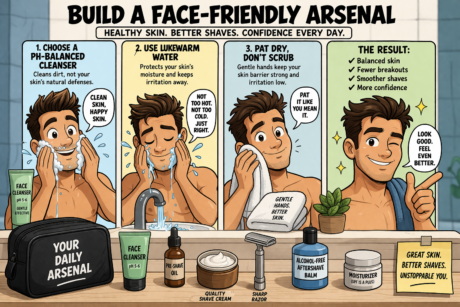
Build a Face-Friendly Arsenal
Choose a pH-Balanced Cleanser
Look for formulas labeled pH 5 to 6. Ingredients such as glycerin, ceramides, aloe, and oat extract cleanse without dismantling the acid mantle. A good test is how your face feels two minutes after rinsing. If you forget to moisturize and your skin still feels relaxed, you have met your match.
Use Lukewarm Water, Not Scalding Jets
Lukewarm water dissolves cleanser residues while maintaining microvascular calm. Hot water increases vasodilation, exaggerating redness and prompting additional moisture loss. Spend thirty seconds working the cleanser in small circles along beard grain to loosen trapped debris without aggression.
Pat Dry, Do Not Scrub
Your mother’s terry-cloth towel can be as abrasive as sandpaper when rubbed with enthusiasm. Instead, fold the towel, press gently, then lift. This method removes water without disturbing the lipid balance you just worked to preserve.
Elevate Your Shaving Ritual
Start With a Pre-Shave Oil
Dropping a few teaspoons of lightweight oil—grapeseed or jojoba—onto damp skin creates a slick runway for the razor. The oil softens keratin in beard hairs, reducing the force needed to slice through. Less force equals fewer tug-induced micro-cuts.
Select the Appropriate Blade Count
Five-blade cartridges may sound futuristic, yet they can multiply irritation on sensitive skin. A single or double-edge safety razor permits precise angle control and fewer passes, limiting friction. Replace blades at the first hint of drag; dull steel invites tears and ingrowns.
Lather With Intention
Whip a quality shaving cream into a dense foam using a synthetic brush. The goal is yogurt thickness, not fluffy meringue. A stout lather cushions the blade and suspends whisker stubble, ensuring a closer cut that does not require pressing down.
Post-Shave Calm Without Alcohol
Skip high-proof splashes that feel like victory but act like punishment. Instead, reach for balms rich in panthenol, allantoin, and antioxidants. These ingredients soothe, rehydrate, and kickstart repair. If you crave scent, apply a discreet spray of cologne on pulse points, far from freshly shaved zones.
Daily Maintenance Habits
Hydrate Internally
Healthy skin starts with cellular hydration. Aim for two liters of water throughout the day, more if you consume dehydrating beverages like coffee or alcohol. Hydrated cells function better at lipid production, strengthening the barrier you so carefully rebuilt.
Change Pillowcases Twice Weekly
Your pillow collects sebum, styling products, and dead cells. Sleeping on that residue for eight hours reintroduces grime you tried to wash away. Fresh cases reduce bacterial load and lower the risk of clogged pores along the temples and cheeks.
Defend Against UV Rays
Sun damage undermines every improvement you make. Apply a broad-spectrum SPF 30 each morning, even in winter. Modern formulations dry clear and weightless so they will not conflict with your post-shave products.
Limit Aggressive Exfoliants
Enzyme masks and BHA toners have their place, but wield them sparingly when your skin is recovering from dish-soap abuse. Once or twice a week is enough to keep cell turnover humming without stripping the barrier anew.
Psychological Benefits of Proper Skin Care
Confidence From Comfort
When your face feels calm rather than tight, you smile more. That subtle ease translates to confidence in meetings, on dates, and during spontaneous video calls. People notice comfort even if they cannot name it.
Ritual as Mindfulness
Taking five conscious minutes to cleanse, shave, and moisturize anchors your morning in deliberate action. The ritual acts as a personal reset button, positioning you to tackle the day with composure rather than rushing into stress.
Conclusion
Dish soap excels at freeing bacon grease, not at nurturing the complex ecosystem that lives on your cheeks. Relegate the lime-green jug to its rightful place by the sink and embrace cleansers, moisturizers, and shaving tools designed for living, breathing skin. Respect the acid mantle, choose lukewarm water, practice gentler razor techniques, and shield your face from sun and dirt.
Elevate your daily ritual, and the mirror will reward you with a smooth, balanced complexion instead of a tight, shiny mask. Your skin—and anyone close enough to feel it—will thank you.