

Razor burn is the flaming exclamation point that ruins a perfectly planned morning. One minute you are gliding a fresh blade across your chin or legs, dreaming of silky victory; the next you are rubbing at angry red bumps that feel like they were imported from a cactus farm.
If you have sworn off tank tops, spontaneous beach trips, or even the soft stroking of your own face because of this stinging nuisance, take heart. The tragedy does not need a sequel. With a few science-backed tweaks—plus the right shaving products—your skin can retire its drama-queen routine and embrace a smoother storyline.
Table of Contents
Why Razor Burn Happens
The Secret Life of Skin and Hair
Picture each hair as a stubborn tree and your skin as the lawn it sprouts from. When you shave, you are not merely trimming grass; you are slicing tree trunks flush to the soil. Every trunk has its own growth angle, thickness, and nerve-ending booby trap.
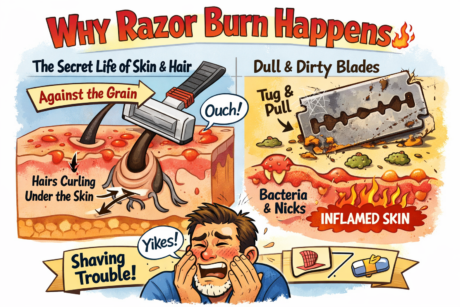
Dragging a blade too quickly, or against the grain, leaves jagged stumps that retreat below the surface, curl, and poke your dermis from underneath. The result? Little red “help” flags that pop up across your cheeks, neck, legs, or wherever you insisted on speed-shaving.
Blade Quality and Maintenance
Your razor should glide like a figure skater on fresh ice. A dull or gunk-clogged blade, however, behaves like a rusty snowplow. Instead of slicing cleanly, it tugs and tears, creating uneven edges that your skin registers as trauma. Add microscopic nicks that invite bacteria, and you have the perfect recipe for inflammation. Changing cartridges at the first hint of drag, plus rinsing thoroughly in hot water after every pass, keeps your edge worthy of a medal.
Breaking the Bad Habits
Preparation Rituals That Matter
Splash-and-dash shaving is about as wise as floor-mopping in socks. Start with heat. A steamy shower or a warm, damp towel loosens follicles and opens pores, turning stubborn hairs into pliable pushovers. Next comes lubrication. A translucent gel or creamy lather lays down a cushion that lets the razor float rather than bulldoze.
Forget the foamy mountains from aerosol cans that evaporate in seconds; you want a slick mantle that stays put for multiple passes. Finally, map your grain. Run fingertips across your stubble to feel which way each patch grows, then commit that fuzzy compass to memory. Shaving with the grain first reduces tugging and minimizes rebellion.
The Right Shave Technique
Think of shaving as painting tiny strokes on a priceless fresher-than-fresh canvas. Short, light passes beat long, pressure-packed scrapes every time. Rinse the blade after two strokes so debris does not build an abrasive wall. If a closer finish is non-negotiable, re-lather and go across the grain rather than directly against it.
Against-the-grain moves are the high-wire act of shaving: impressive when executed flawlessly, catastrophic when you wobble. Keep the handle at roughly thirty degrees, allowing the razor’s weight—not your wrist flex—to press the blade into action. Your skin will thank you by staying calm and color-coordinated with the rest of your body.
Post-Shave Recovery and Prevention
Cooling and Hydration
Your freshly shorn skin resembles a stadium after a wild concert: hot, crowded with microscopic debris, and craving cleanup. Rinse with cool water to close pores and calm residual heat. Then pat—never scrub—dry with a clean towel. Follow with an alcohol-free aftershave balm loaded with soothing ingredients such as aloe vera, witch hazel, and vitamin E.
These helpers form a lightweight shield while dialing down redness faster than you can say “where was this balm last week.” Hydrated skin is resilient skin, so finish with a fragrance-free moisturizer that seals in moisture without clogging pores.
When to Replace Your Tools
If your razor cartridge were a milk carton, it would have an expiration scent, not just a date. Dragging, skipping, or an audible scraping sound means the blade has passed its prime. For daily shavers, swapping every week keeps the edge crisp; for occasional groomers, every five to seven sessions does the trick.
Store the razor upright in a dry spot rather than drowning it in a puddle on the sink. Waterlogged metal invites oxidation, and guess what rusty edges do for razor burn? Exactly.
Mindset Shift: Turning Routine into Self-Care
Slow Down and Savor
A rushed shave is a crash course in epidermal regret. Set aside an extra five minutes and treat the process like a mini spa break. Inhale the herbal notes of your cream, feel the warmth of the water, listen to the soft swish of brush on skin. This mindful approach not only lowers cortisol but improves technique because attention replaces autopilot. When you finish, you will sport a face or pair of legs that looks and feels like it spent the morning at a luxury barber rather than in a battle.
Tracking Your Skin’s Story
Your skin keeps score, and you can read the playbook if you pay attention. Notice flare-ups after every third day? That may signal a need to stretch your shave schedule or switch cream formulas. Tiny whitehead clusters along the jaw? Perhaps your cleanser leaves residue that clogs freshly opened follicles.
Treat each reaction as feedback rather than failure. Jot notes in a journal or phone memo, then tweak one variable at a time. Over a month or two, patterns emerge, guiding you toward a personal protocol that outsmarts razor burn with surgical precision.
Conclusion
Razor burn may have headlined your bathroom tragedies in the past, but it does not deserve another encore. Warm prep, sharp blades, deliberate strokes, and soothing aftercare work together like a well-rehearsed quartet, turning scratchy solos into smooth harmony.
Add a dash of patience and a splash of self-awareness, and you will step out the door with skin so calm it practically hums. Toss the store-brand camouflage creams back on the shelf; you will not need them anymore. The next time someone compliments your glow, smile knowingly—you faced your fiery foe and shaved it out of the script.